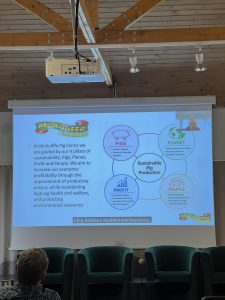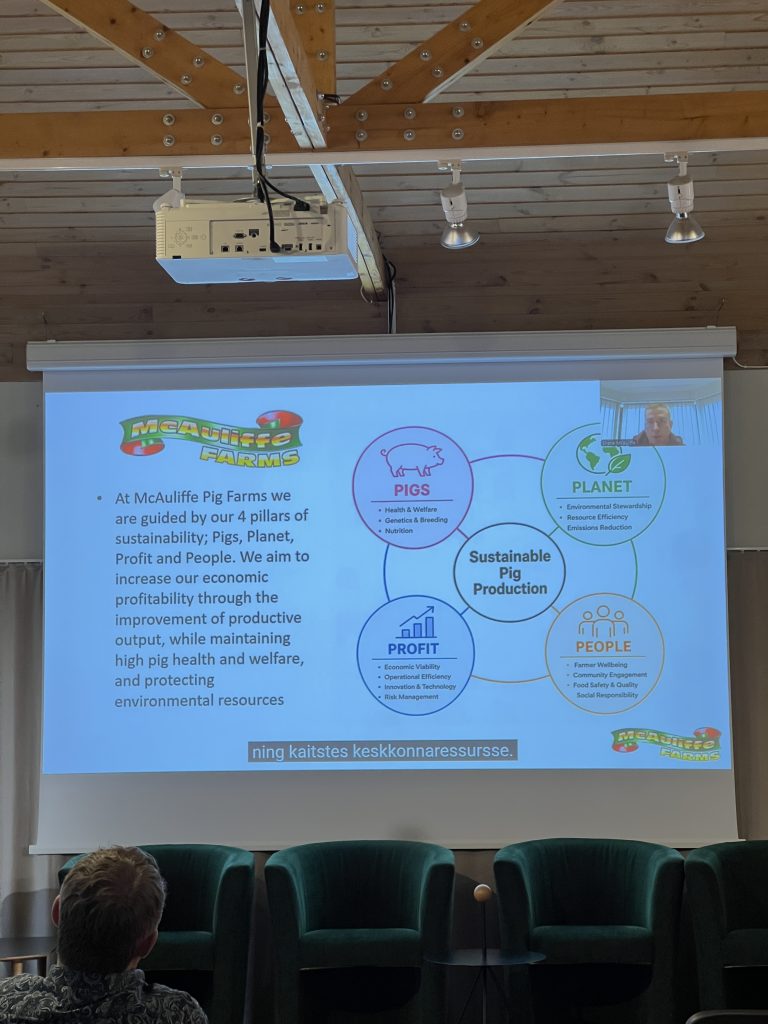
Shane McAuliffe was invited to speak at this week’s Estonian National Pig Conference, sharing practical experiences of how digitalisation and data are being used on Irish pig farms.
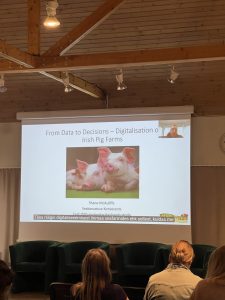
The presentation, entitled “From Data to Decisions – Digitalisation on Irish Pig Farms,” explored how technology can help farmers turn the large amounts of information generated on modern farms into practical management decisions.
A key example from our farms is the use of Jyga Technologies’ GESTAL 3G electronic sow feeding system, which allows sows living in groups to be managed individually. Feeding information can help identify changes in intake and direct farm staff towards individual animals requiring closer attention.
The presentation also looks at the increasing importance of animal health data. This includes research from Teagasc’s PathSurvPig project demonstrating the relationship between disease and pig performance, alongside the proactive use of PCR and serology to better understand herd disease status and vaccination programmes.
Shane also discussed Animal Health Ireland’s Pig HealthCheck programme, through which farmers can access information including biosecurity assessments, tail-biting risk assessments, ante-mortem findings, antimicrobial usage and Salmonella results. Bringing these different sources of information together can help identify areas where changes can be made at farm level.
However, the central message of the presentation is that digitalisation should support rather than replace the skills and experience of the people caring for animals.
“Farmers have always collected data. Technology now gives us opportunities to collect and interpret much more of it, but collecting data isn’t the objective. It has to help us make better decisions. Technology shouldn’t replace skilled animal care and human judgement, it should give people better information to make better decisions.”
The presentation concludes with a simple message that underpins our approach to digitalisation:
“Data has no value until it changes a decision.”
We would like to thank Kaie Laaneväli-Vinokurov, Gelis Pihelgas and the Estonian Chamber of Agriculture and Commerce (Eesti Põllumajandus-Kaubanduskoda) for the invitation and the opportunity to share some of the experiences of digitalisation in Irish pig production with farmers and industry colleagues in Estonia.